Fat Loss Workout Plan Guide for Busy Schedules
This guide walks you through a practical and flexible loss weight program designed for people with limited time. It focuses on efficiency, consistency, and realistic expectations.
Understanding a Weight Loss Workout Plan
A weight loss exercise plan doesn’t have to be complicated. The key is combining movement, intensity, and consistency. When your body burns more calories than it consumes over time, fat loss can occur.
For busy individuals, the focus should be on workouts that:
- Burn calories quickly
- Engage multiple muscle groups
- Require minimal equipment
- Fit into short time windows
Short workouts done consistently often work better than long, irregular sessions.
Why Short Workouts Can Be Effective
Many people assume longer workouts are always better. That’s not necessarily true. Short sessions, especially when done at higher intensity, can help improve metabolism and energy levels.
Here’s why they work:
- They are easier to stick to
- They reduce mental resistance
- They can be done anywhere
- They help maintain consistency
A structured workout program for weight loss should prioritize sustainability over perfection.
Best Exercises to Lose Belly Fat
Targeting belly fat directly isn’t possible, but certain exercises can help reduce overall body fat, which includes the abdominal area. The best fat burning exercises are those that increase heart rate and engage multiple muscles.
Full-Body Fat Burning Exercises
These exercises are efficient and ideal for tight schedules:
- Jump Squats: Boost heart rate and strengthen legs
- Burpees: Combine strength and cardio in one move
- Mountain Climbers: Great for core and endurance
- Push-Ups: Build upper body strength
- Plank Variations: Improve core stability
These movements are often considered the best exercise for fat loss because they work several muscle groups at once.
Cardio vs Strength Training
Both types of exercise play an important role in a fitness plan to lose weight.
- Cardio helps burn calories during the workout
- Strength training supports muscle growth and improves metabolism
A balanced weight loss training program includes both for better long-term results.
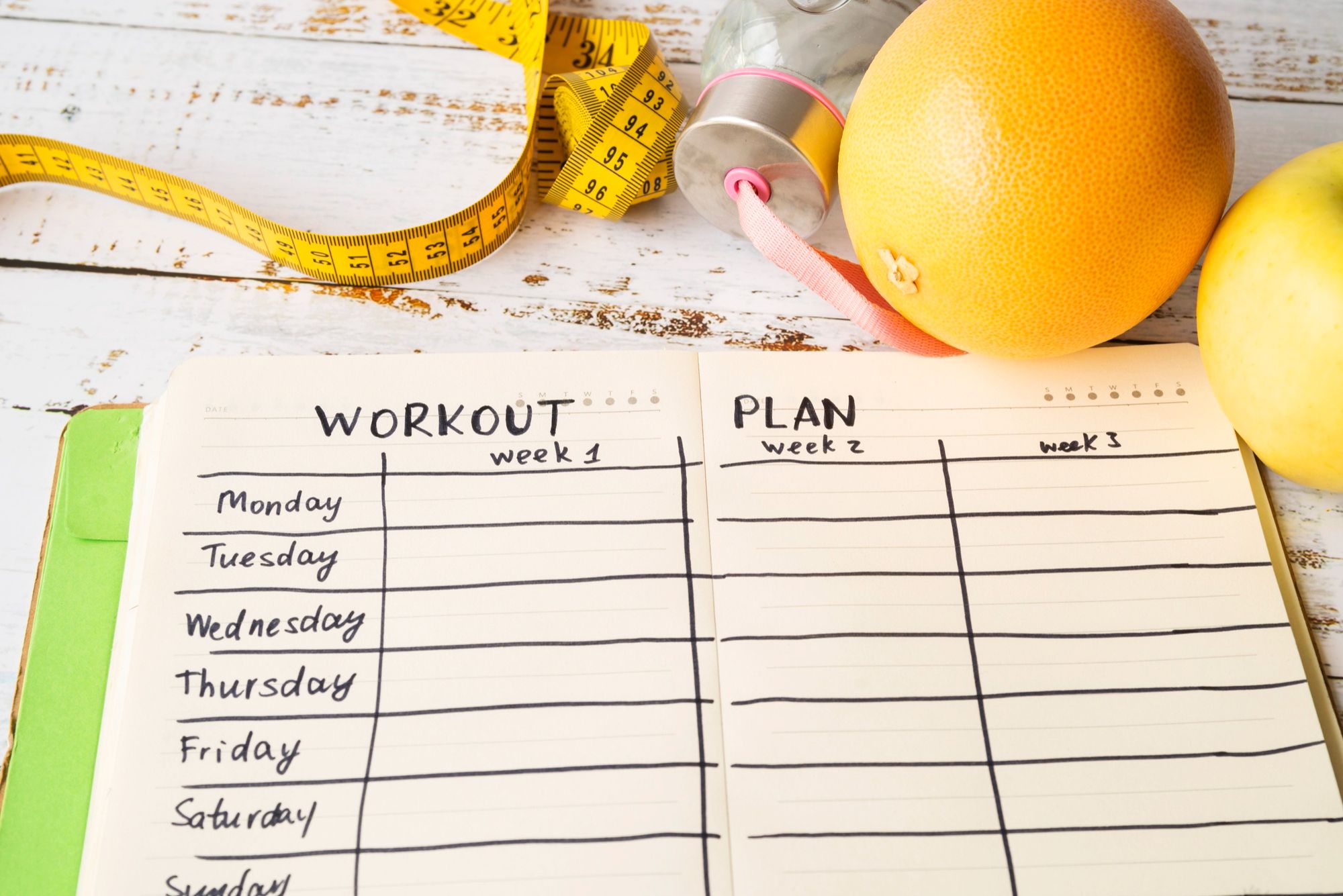
Weekly Workout Structure Example
Below is a simple structure that fits into a busy schedule:
| Day | Workout Type | Duration |
|---|---|---|
| Monday | Full-body HIIT | 20 mins |
| Tuesday | Light cardio (walking) | 20 mins |
| Wednesday | Strength training | 25 mins |
| Thursday | Rest or stretching | 15 mins |
| Friday | HIIT + core | 20 mins |
| Saturday | Active recovery | 20 mins |
| Sunday | Rest | — |
This flexible weight loss workout plan allows movement without overwhelming your schedule.
How to Build a Workout Program for Weight Loss
Creating a workout program for weight loss doesn’t require a complicated setup. Focus on structure and progression.
Keep It Simple and Consistent
Start with 3–4 sessions per week. Each session can include:
- A warm-up (3–5 minutes)
- Main workout (15–20 minutes)
- Cool-down (3–5 minutes)
This format ensures efficiency without taking too much time.
Focus on Intensity Over Duration
When time is limited, intensity matters more. Short bursts of effort followed by rest can improve calorie burn.
Example format:
- 30 seconds exercise
- 15 seconds rest
- Repeat for 15–20 minutes
This approach is commonly used in effective exercise program for weight loss routines.
Track Your Progress
You don’t need complex tools. Simple tracking helps:
- Number of workouts completed
- Energy levels
- Consistency over time
Avoid focusing only on weight. Progress includes improved strength and stamina.
Tips for Staying Consistent
Consistency is often the biggest challenge. Even the best exercise plan won’t work if it’s not followed regularly.
Make Workouts Part of Your Routine
Choose a fixed time each day. Early morning or evening sessions work well for many people. Treat it like an important appointment.
Prepare in Advance
Lay out your workout clothes or plan your session ahead of time. This reduces decision fatigue.
Keep It Flexible
Busy schedules can change. If you miss a session, adjust instead of quitting. A shorter workout is still better than none.
Stay Realistic
Avoid expecting instant results. Fat loss takes time and varies from person to person. Focus on building habits rather than chasing quick changes.
Common Mistakes to Avoid
Understanding what not to do can improve your results.
Skipping Warm-Ups
Even short workouts need preparation. A quick warm-up helps prevent injury and improves performance.
Doing Only One Type of Exercise
Relying only on cardio or only on strength training limits progress. A mix is more effective.
Overtraining
Too much exercise without rest can lead to fatigue. Rest days are part of a balanced weight loss training program.
Ignoring Nutrition
While this article focuses on workouts, food choices also play a role. Balanced eating supports your efforts without extreme restrictions.
Quick 20-Minute Sample Workout
Here’s a simple routine you can try at home:
Warm-Up (3 minutes)
- March in place
- Arm circles
- Light stretching
Main Workout (15 minutes)
- Jump squats – 30 sec
- Push-ups – 30 sec
- Mountain climbers – 30 sec
- Plank – 30 sec
- Rest – 30 sec
Repeat the cycle 3–4 times.
Cool-Down (2 minutes)
- Gentle stretching
- Deep breathing
This short routine fits easily into a busy day and supports your overall fitness plan to lose weight.
Conclusion
A busy schedule doesn’t have to stop you from staying active. The key to a successful weight loss workout plan is consistency, simplicity, and flexibility. Short, focused sessions using the best fat burning exercises can make a meaningful difference over time.
Start small, stay regular, and adjust as needed. A well-structured workout program for weight loss doesn’t require perfection—just commitment and patience. Over time, these small efforts can build into lasting habits that support your overall well-being.