No Equipment Workout Guide: Basics, Tips, Insights & Practical Knowledge
Whether you're a beginner starting your fitness journey or someone looking for a convenient routine, no equipment workouts remove common barriers such as gym costs, travel time, and space limitations. With proper structure and consistency, these workouts can build strength, improve endurance, enhance flexibility, and support overall health. This guide provides a clear, beginner-friendly yet professional overview of how to get started, what exercises to include, and how to maximize results without any equipment.
What Is a No Equipment Workout?
A no equipment workout uses bodyweight resistance to train muscles. Instead of lifting external weights, your body provides the resistance needed for strength and conditioning.
Key Features:
- Requires no gym or machines
- Can be done anywhere
- Suitable for all fitness levels
- Focuses on functional movements
Benefits of No Equipment Workouts
1. Accessibility
Anyone can start immediately without needing to purchase equipment or join a gym.
2. Cost-Effective
No investment is required, making it ideal for long-term sustainability.
3. Functional Strength
Exercises mimic real-life movements, improving balance, coordination, and mobility.
4. Time Efficiency
Quick routines (15–30 minutes) can still deliver effective results.
5. Flexibility
You can customize routines based on your goals—strength, fat loss, or endurance.
Essential Bodyweight Exercises
Upper Body
- Push-ups
- Incline push-ups (beginner-friendly)
- Pike push-ups (shoulders)
- Tricep dips (using a chair or surface)
Lower Body
- Squats
- Lunges
- Step-ups (using stairs)
- Glute bridges
Core
- Plank
- Side plank
- Bicycle crunches
- Leg raises
Cardio
- Jumping jacks
- High knees
- Mountain climbers
- Burpees
Sample No Equipment Workout Plan
Beginner Routine (20–25 Minutes)
Perform each exercise for 30 seconds, rest 15 seconds:
- Squats
- Push-ups (knees if needed)
- Plank
- Lunges
- Jumping jacks
Repeat for 2–3 rounds.
Intermediate Routine (30 Minutes)
Perform each exercise for 40 seconds, rest 20 seconds:
- Jump squats
- Standard push-ups
- Mountain climbers
- Plank with shoulder taps
- Alternating lunges
Repeat for 3–4 rounds.
Advanced Routine (35–40 Minutes)
Perform each exercise for 45 seconds, rest 15 seconds:
- Burpees
- Decline push-ups
- Pistol squats (or assisted)
- Plank to push-up
- High knees
Repeat for 4–5 rounds.
Tips for Better Results
1. Focus on Form
Proper technique prevents injuries and ensures effectiveness.
2. Progressive Overload
Increase intensity by:
- Adding more reps
- Reducing rest time
- Trying advanced variations
3. Consistency Matters
Aim for at least 3–5 sessions per week.
4. Combine with Nutrition
Balanced nutrition supports muscle growth and recovery.
5. Warm-Up and Cool Down
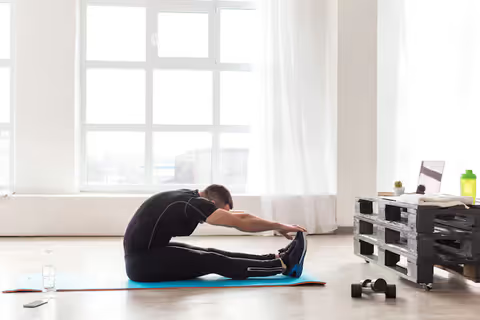
Always start with light cardio and end with stretching.
Common Mistakes to Avoid
- Skipping warm-ups
- Poor posture during exercises
- Overtraining without rest
- Not progressing intensity
- Ignoring recovery and hydration
Who Should Try No Equipment Workouts?
- Beginners starting fitness journeys
- Busy individuals with limited time
- Travelers or remote workers
- Anyone looking for flexible fitness options
Conclusion
No equipment workouts provide a practical, effective, and sustainable way to stay fit without relying on a gym or expensive tools. By focusing on bodyweight exercises, maintaining consistency, and gradually increasing intensity, you can achieve strength, endurance, and overall fitness from virtually anywhere. This approach proves that achieving health and fitness goals doesn’t require complex setups—just commitment, proper technique, and a well-structured routine.