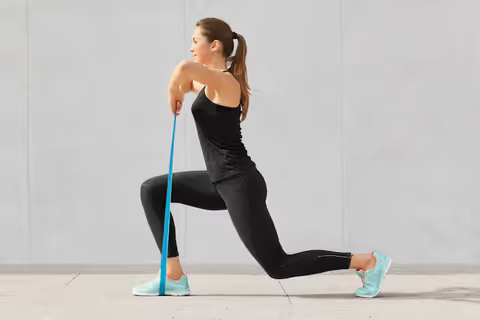
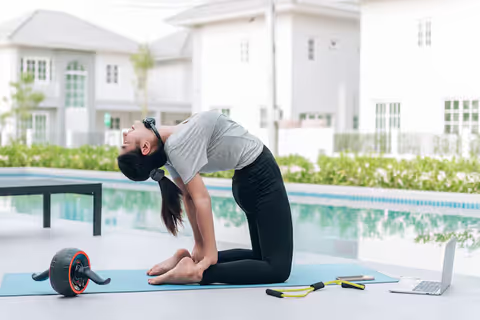
Resistance Band Workouts: A Complete Guide to Strength, Flexibility, and Everyday Fitness
In recent years, more people have shifted toward practical and space-efficient workouts. Resistance band workouts fit perfectly into this trend because they are easy to use, lightweight, and adaptable to different fitness levels. From full-body routines to targeted muscle training, they help create effective workouts that feel natural and sustainable.
What is Resistance Band Workouts
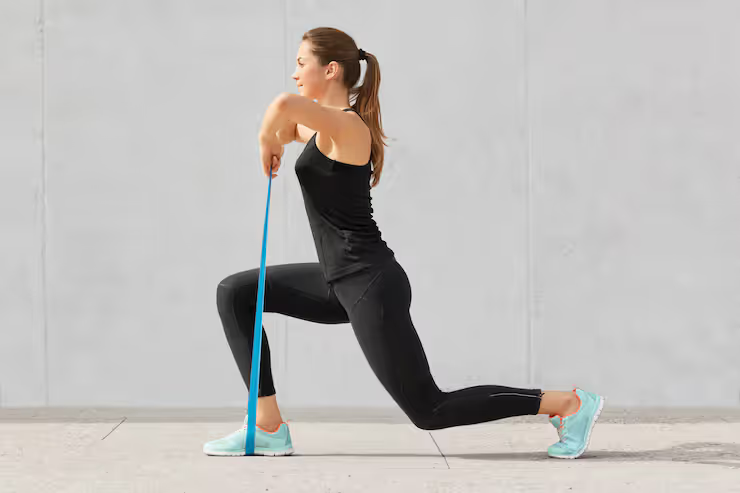
Resistance band workouts refer to exercises that use elastic bands to create tension and resistance. These bands stretch when pulled, forcing your muscles to work harder during movements. Unlike traditional weights, the resistance increases as the band stretches, which adds a unique challenge to each exercise.
These workouts are widely used for strength training, rehabilitation, mobility improvement, and even cardio routines. Resistance bands come in different levels of tension, allowing users to gradually increase intensity as they progress. This makes resistance band workouts suitable for people of all fitness levels, from beginners to advanced athletes.
How Resistance Band Workouts Works
Resistance band workouts work by creating continuous tension throughout each movement, which engages muscles more effectively compared to static weights; as you stretch the band, resistance increases, forcing your muscles to stabilize, control, and complete the motion, resulting in improved strength, coordination, and flexibility over time.
Key Benefits of Resistance Band Workouts
Resistance band workouts provide a wide range of physical and practical benefits that make them an excellent addition to any fitness routine.
- Improves muscle strength without heavy equipment
- Enhances flexibility and joint mobility
- Supports full-body workouts with minimal space
- Reduces risk of injury due to controlled resistance
- Ideal for rehabilitation and recovery exercises
- Portable and easy to use anywhere
- Allows progressive intensity with different band levels
Practical Examples or Use Cases
Resistance band workouts can be applied in various fitness scenarios depending on goals and preferences.
| Category | Function | Example Use Case |
|---|---|---|
| Strength Training | Builds muscle strength | Resistance band squats and chest press |
| Rehabilitation | Supports recovery movements | Shoulder mobility exercises |
| Flexibility | Improves stretching ability | Hamstring stretch with bands |
| Core Training | Strengthens abdominal muscles | Seated band twists |
| Cardio Workouts | Adds resistance to dynamic moves | Band-assisted jumping exercises |
| Home Fitness | Enables full workouts at home | Full-body resistance band circuit |
Tips or Best Practices
- Start with light resistance and increase gradually
- Maintain proper form to avoid strain or injury
- Control both stretching and returning movements
- Combine different exercises for a balanced routine
Common Mistakes to Avoid
Many beginners make the mistake of using resistance bands incorrectly, such as choosing bands that are too tight or too loose, which can reduce effectiveness or lead to discomfort. Another common issue is poor form, where users rely on momentum instead of controlled movements. Skipping warm-ups or overtraining specific muscle groups can also limit progress. Paying attention to technique and consistency is key to getting the best results from resistance band workouts.
Future Trends or Insights
As fitness continues to evolve, resistance band workouts are becoming even more integrated into modern training approaches due to their flexibility and accessibility.
- Increased use in home-based and digital fitness programs
- Integration with smart fitness tracking technologies
- Growing popularity in rehabilitation and physical therapy
- Hybrid workouts combining bands with bodyweight training
- Expansion into group fitness and virtual classes
Frequently Asked Questions (FAQ)
1. Are resistance band workouts effective for building muscle?
Yes, resistance band workouts can effectively build muscle when used consistently and with proper intensity.
2. Can beginners start with resistance band workouts?
Absolutely. They are beginner-friendly and allow gradual progression based on strength levels.
3. How often should I do resistance band workouts?
You can perform them 3–5 times per week depending on your fitness goals and recovery time.
4. Do resistance bands replace traditional weights?
They can be a great alternative, especially for home workouts, but both methods can complement each other.
5. Are resistance band workouts safe?
Yes, they are generally safe when used correctly with proper form and appropriate resistance levels.
Conclusion
Resistance band workouts offer a practical and effective way to stay active, build strength, and improve overall fitness without the need for complex equipment. Their simplicity and adaptability make them suitable for people of all ages and fitness levels.
As more individuals look for flexible and sustainable workout options, resistance band workouts are likely to become even more popular. By incorporating them into your routine, you can enjoy a balanced and efficient approach to fitness that fits easily into your daily life.
Disclaimer: The information provided in this article is for informational purposes only. We do not make any claims or guarantees regarding the accuracy, reliability, or completeness of the information presented. The content is not intended as professional advice and should not be relied upon as such. Readers are encouraged to conduct their own research and consult with appropriate professionals before making any decisions based on the information provided in this article.