Joint Friendly Workouts: A Practical Guide to Safe and Effective Fitness
In today’s fast-paced world, more people are looking for sustainable ways to exercise without risking long-term damage. Joint friendly workouts focus on controlled movements, proper form, and low-impact techniques that protect your knees, hips, shoulders, and spine. They are suitable for beginners, older adults, and even experienced fitness enthusiasts who want to train smarter.
What is Joint Friendly Workouts
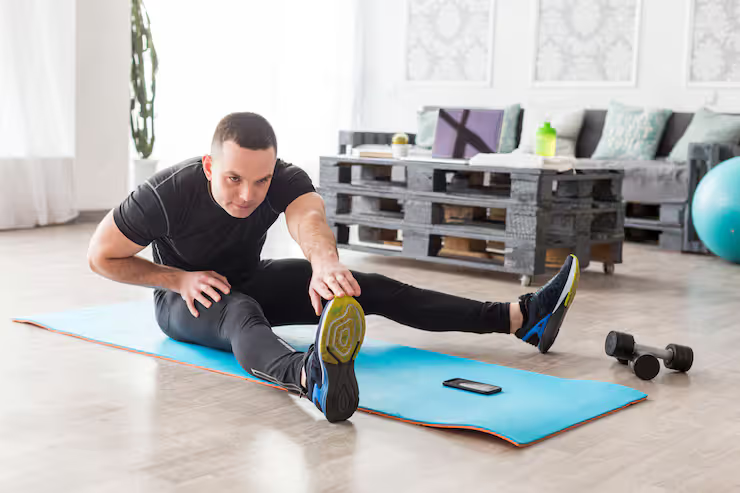
Joint friendly workouts are exercise routines designed to minimize stress on the joints while still providing effective physical activity. Instead of high-impact movements like jumping or heavy pounding, these workouts focus on smooth, controlled motions that support joint health. They often include low-impact exercises such as walking, swimming, cycling, yoga, and strength training with lighter resistance.
The goal of joint friendly workouts is not just to avoid pain but to improve overall mobility and stability. By strengthening the muscles around the joints, these workouts help reduce pressure and improve alignment. This makes everyday activities easier and lowers the risk of injury over time.
How Joint Friendly Workouts Works
Joint friendly workouts work by combining low-impact movements with proper body mechanics to reduce strain on joints while still engaging muscles effectively. These exercises improve flexibility, strengthen supporting muscles, and enhance balance, allowing joints to move smoothly and safely without excessive pressure or sudden impact.
Key Benefits of Joint Friendly Workouts
Joint friendly workouts provide a balanced approach to fitness that supports both short-term comfort and long-term health. They are especially useful for people who want to stay active without discomfort or risk of injury.
- Reduces joint stress and prevents unnecessary strain
- Improves flexibility and range of motion
- Strengthens muscles that support joints
- Helps manage body weight effectively
- Enhances balance and coordination
- Suitable for all fitness levels, including beginners
- Lowers the risk of injuries during exercise
- Supports long-term mobility and independence
Practical Examples or Use Cases
Below is a table showing how joint friendly workouts can be applied in real-life situations:
| Category | Function | Example Use Case |
|---|---|---|
| Walking | Low-impact cardio | Daily morning walk for 20–30 minutes |
| Swimming | Full-body movement without joint stress | Water aerobics for people with knee pain |
| Yoga | Flexibility and balance | Gentle stretching routine for back stiffness |
| Cycling | Cardiovascular fitness | Stationary bike workouts at home |
| Resistance Training | Muscle strengthening | Using resistance bands for light strength work |
| Pilates | Core stability and posture | Controlled movements for spinal support |
Tips or Best Practices
- Start slow and gradually increase intensity to avoid overloading joints
- Focus on proper form rather than speed or repetition count
- Use supportive footwear and comfortable surfaces for exercise
- Include warm-up and cool-down routines in every session
Common Mistakes to Avoid
Many beginners make the mistake of pushing too hard too quickly, thinking that more intensity leads to better results. In joint friendly workouts, this approach can lead to discomfort or injury. Ignoring proper form, skipping warm-ups, and choosing exercises that are too advanced can also put unnecessary strain on joints. Another common issue is not listening to your body—if something feels painful rather than slightly challenging, it’s important to stop and adjust your routine.
Future Trends or Insights
As awareness about long-term health grows, joint friendly workouts are becoming more popular across all age groups. Fitness is shifting from intense, high-impact routines to more sustainable and mindful approaches.
- Increased focus on low-impact fitness programs
- Growth of home-based workout solutions
- Integration of wearable technology for movement tracking
- Rising popularity of mobility and flexibility training
- Personalized workout plans based on joint health needs
Frequently Asked Questions (FAQ)
1. Are joint friendly workouts suitable for beginners?
Yes, they are ideal for beginners because they are gentle, easy to follow, and reduce the risk of injury.
2. Can joint friendly workouts help with pain relief?
They can help reduce discomfort by improving flexibility and strengthening muscles around the joints.
3. How often should I do joint friendly workouts?
You can perform them 3–5 times a week depending on your fitness level and comfort.
4. Do I need equipment for joint friendly workouts?
Not necessarily. Many exercises can be done using body weight, though light tools like resistance bands can be helpful.
5. Are these workouts only for older adults?
No, they are suitable for all ages, especially anyone looking to protect their joints while staying active.
Conclusion
Joint friendly workouts offer a practical and sustainable way to stay fit without putting unnecessary stress on your body. By focusing on controlled movements, proper technique, and low-impact exercises, they help improve strength, flexibility, and overall mobility. This makes them an excellent choice for people at any stage of their fitness journey.
As more individuals prioritize long-term health over short-term intensity, joint friendly workouts are becoming an essential part of modern fitness routines. Incorporating these exercises into your daily life can help you stay active, reduce discomfort, and maintain a healthier lifestyle for years to come.